
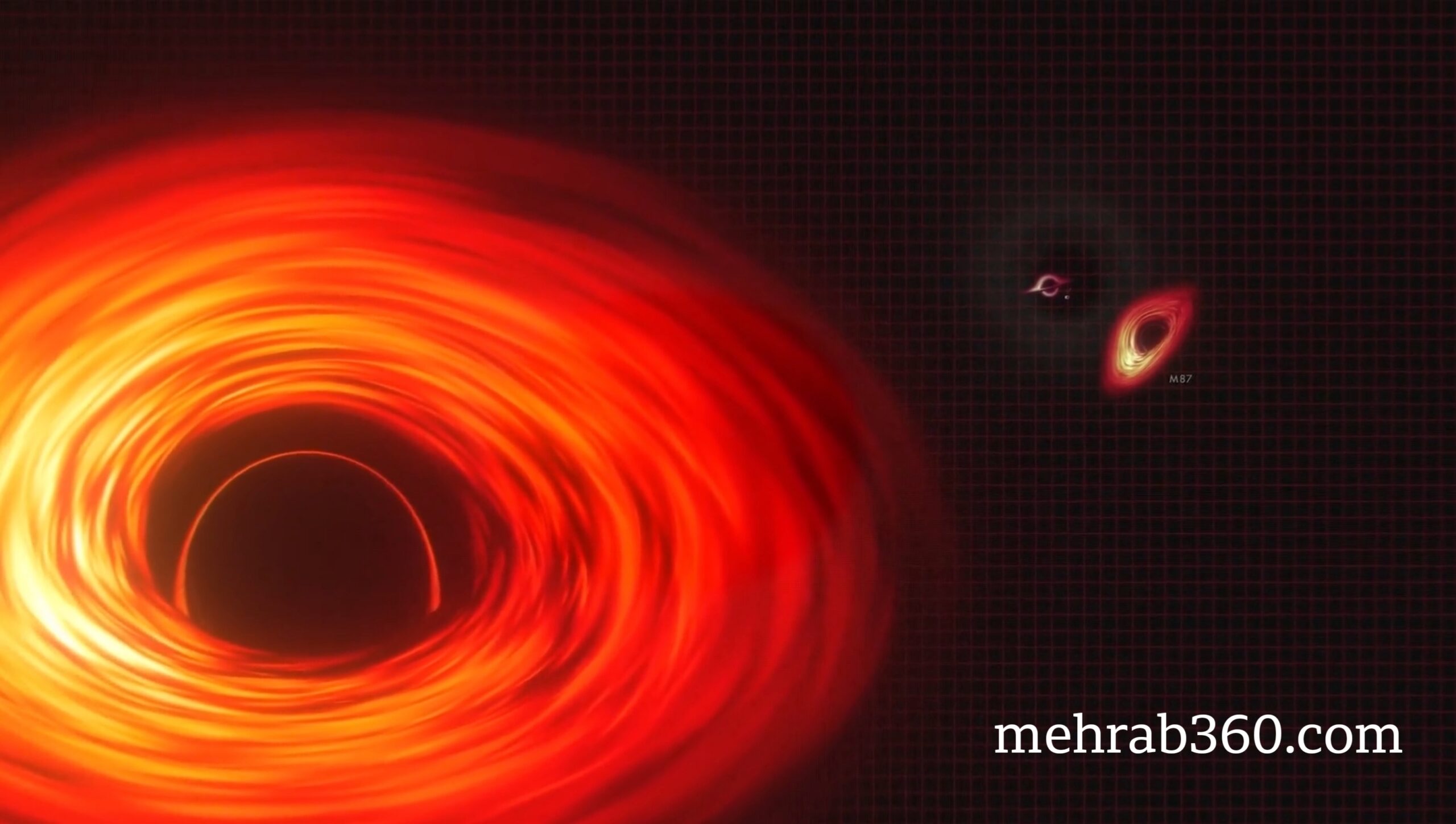
About a decade ago, a special laboratory called the Laser Interferometer Gravitational-Wave Observatory, or LIGO, detected a completely new type of signal in space. It was a type of gravitational wave. Two massive black holes about 1.3 billion light-years away merged with each other. As a result, a powerful gravitational wave was created in space, which was detected by LIGO’s instrument when it reached Earth.
Ads
Since that incident, researchers have focused on improving their instruments to more accurately detect such transient waves in space. Whenever such a wave is found, it is added to a catalog. This catalog is created by an international network of four gravitational wave detectors called LIGO-Virgo-Kagra. The network includes two LIGO stations in the United States, the Virgo station in Italy, and the Kagra station in Japan.
Ads
A huge record has recently been added to this list. Between April 2024 and January 2025, scientists have detected a record number of 161 gravitational waves. Scientists are very excited about the discovery of these mysterious waves in space one after another. They believe that this has ushered in a new era of gravitational astronomy to understand the universe.
Ads
Whenever a wave is discovered, it is added to a catalog. This list is created by an international network of four gravitational wave detectors called LIGO-Virgo-CAGRA. In a statement, Ed Porter, a researcher at the French National Center for Scientific Research and Paris City University, said that the detectors they use are now so sensitive that at least three to four gravitational wave signals are being easily detected every week.
Ads
A large team of scientists from around the world is now working to analyze and research this huge amount of data. This progress has allowed us to move beyond the initial stages of just a few new discoveries and now enter the era of precise and accurate gravitational astronomy. The new signals that have been detected each week recently represent about 75 percent of the total gravitational wave signals detected by the LVK network so far. These discoveries bring the total number of confirmed gravitational wave signals on the scientists’ list to 390.
Ads
The more such strange and rare phenomena in space can be observed, the easier it will be for researchers to study the mysterious places of the universe. In addition, it will help to more clearly understand the true nature of black holes, their formation and the answers to many other fundamental questions of astrophysics.
Ads
Scientists have made several great discoveries from the list of recently discovered gravitational waves. Scientists have been able to accurately calculate where in the universe the original source of the wave named GW240615 is. Again, the clearest and most precise signal has been found from the wave named GW250114. In addition, two waves named GW241011 and GW241110 give scientists a new idea. According to them, they provide evidence of the existence of second-generation black holes, which are basically formed by the merger of several smaller black holes.
Ads
The new signals that have been found each week recently account for about 75 percent of the total gravitational waves detected by the LVK network so far. Mario Spera, a researcher at the International School for Advanced Studies in Italy, is working on the subject. He said that these events clarify one thing – how black holes are born, grow or merge with each other. However, scientists are optimistic that with each new list of the LVK network, the picture of this mystery will become clearer and more surprising.
Ads
The amount of information obtained from these 161 newly discovered waves is enough to keep scientists busy with research for the next few years. However, according to the international team of researchers, even bigger surprises are coming. Because, they are constantly working to improve the detector instruments so that these waves of the universe can be captured more finely and accurately.