
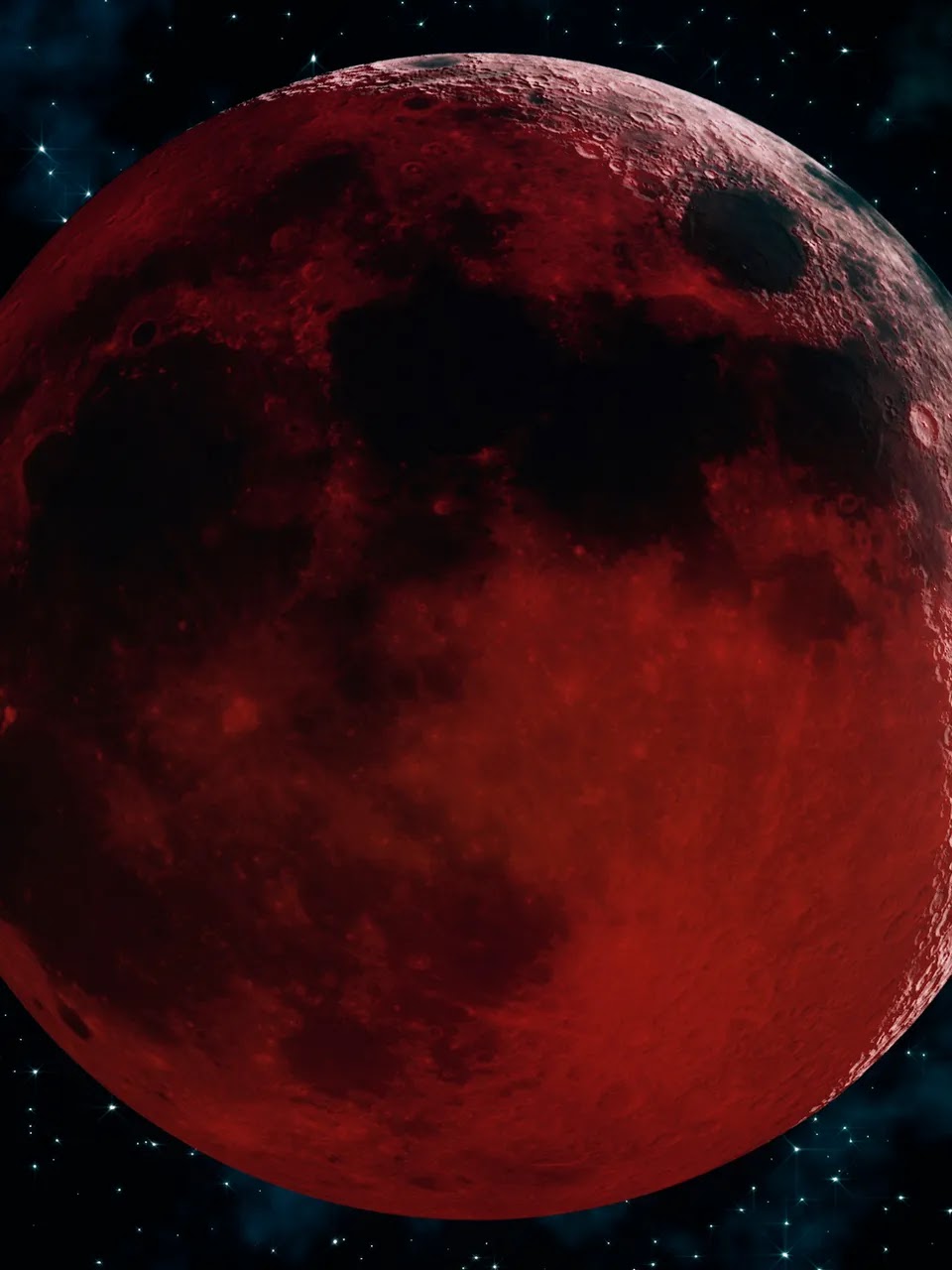
Next month, the Earth will come between the sun and the moon, causing the moon to take on an eerie reddish hue.
 |
| Getty images |
On March 3, 2026, the universe will stage one of its most dramatic performances: a total lunar eclipse, popularly known as a Blood Moon. For a brief and unforgettable moment, the familiar silver coin of the night sky will transform into a glowing ember, suspended in darkness like a cosmic lantern.
This will be the first major astronomical event visible from Earth in 2026, and it offers both casual skywatchers and serious astronomy lovers a rare chance to witness celestial geometry in motion.
What Is a Total Lunar Eclipse?
A total lunar eclipse occurs when Earth moves directly between the Sun and the Moon, casting its shadow completely over the lunar surface. Normally, the Moon shines because it reflects sunlight. But during a total eclipse, Earth blocks the direct sunlight, leaving the Moon in darkness. Yet the Moon does not vanish. Instead, it turns red.
This reddish glow gives rise to the name “Blood Moon.” It is not a supernatural event, but a beautiful consequence of physics and Earth’s atmosphere. According to NASA, the effect happens because Earth’s atmosphere bends and filters sunlight. Blue wavelengths scatter in all directions, while red wavelengths travel farther and curve into Earth’s shadow, reaching the Moon. The result is a Moon painted in shades of copper, crimson, or burnt orange. NASA describes it poetically: it is as if every sunrise and sunset on Earth is projected onto the Moon at once.
Date and Duration of the 2026 Blood Moon
The total lunar eclipse will occur on March 3, 2026.
Although the eclipse begins earlier, the most dramatic phase, called totality, will last only about 12 minutes. During this short window, the entire Moon will glow red. This brief duration makes the event even more precious, like a rare gemstone flashing before disappearing into darkness.
Visibility Around the World
Not everyone on Earth will see the same show. Visibility depends on your location and whether the Moon is above the horizon at the right time.
Fully Visible Regions
The eclipse will be clearly visible across much of North and Central America.
Partially Visible Regions
In Central and South Asia, including Bangladesh and cities like Dhaka, only part of the eclipse may be visible, and viewing conditions will depend on local timing and horizon clarity.
Not Visible Regions
Europe and Africa will miss this event entirely, as the Moon will be below the horizon during totality.
Exact Timing in Major Cities
Here are the local times when totality will begin in several major cities:
Los Angeles: 3:04 am
Denver: 4:04 am
Chicago: 5:04 am
St. Louis: 5:04 am
New York City: 6:04 am
Washington, DC: 6:04 am
At these times, the Moon will already be close to the horizon, preparing to set as dawn approaches.
Why the Moon Turns Red
The explanation lies in Earth’s atmosphere, which acts like a giant lens and color filter. Earth’s atmosphere scatters shorter blue wavelengths of sunlight. This scattering is the same reason the daytime sky appears blue. But longer red wavelengths pass through the atmosphere more easily. During a lunar eclipse, this red light bends into Earth’s shadow and illuminates the Moon.
If you could stand on the Moon during the eclipse, you would see Earth surrounded by a glowing ring of red light, created by all the sunrises and sunsets happening simultaneously around the planet. It is a reminder that Earth itself becomes part of the spectacle.
Why Lunar Eclipses Are Special
Total lunar eclipses occur approximately once every 2.5 years on average. Interestingly, total solar eclipses happen slightly more often, about every 18 months. However, lunar eclipses appear more frequent to observers because they can be seen from anywhere on Earth where it is nighttime. Solar eclipses, in contrast, are visible only from a narrow path.
An observer might see several total lunar eclipses in their lifetime but may need to wait centuries to see a total solar eclipse from the exact same city.
How to Watch the Blood Moon Safely
One of the best things about lunar eclipses is their simplicity. Unlike solar eclipses, which require protective glasses, lunar eclipses are completely safe to watch with the naked eye. No special equipment is required. However, these tips will improve your experience:
1. Choose a high location
The Moon will be close to the horizon during totality, so hills, rooftops, or open fields provide better views.
2. Avoid obstacles
Buildings, trees, and mountains can block your view.
3. Dress warmly
The eclipse happens in early morning hours when temperatures are lower.
4. Use binoculars or a telescope (optional)
While not necessary, these tools enhance detail and reveal subtle color variations.
A Cosmic Reminder of Our Place
A Blood Moon is more than an astronomical event. It is a quiet demonstration of cosmic alignment. The Sun, Earth, and Moon form a perfect line across millions of kilometers, like dancers hitting their marks on an invisible stage. The Moon, usually bright and familiar, becomes transformed. Its red glow reminds us that we live inside a vast system of moving worlds, guided by gravity and light. For 12 minutes on March 3, 2026, the sky will whisper a story written in shadow and fire.
Source: www.wired.com