
International Space Station future plan may not be closing as soon as previously planned. According to NASA’s earlier schedule, the station was expected to retire in 2030. However, new developments in the United States suggest that the timeline could be extended. Lawmakers in the US Senate are now pushing a proposal that would keep the International Space Station operating for at least two more years, potentially changing the future of human space exploration.
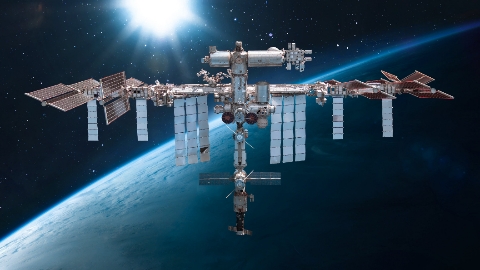
A new proposal has been added to the draft of the NASA Authorization Act of 2026 by the Senate Committee on Commerce, Science and Transportation. The proposal directs NASA to continue operating the International Space Station until at least 2032. It also includes an important condition: NASA will not be allowed to remove the station from orbit or destroy it until a new commercial space station built by private companies becomes fully operational.
Suggest Read: SpaceX and NASA launch astronauts to relieve bare-bones crew at ISS
The International Space Station is now quite old and approaching the end of its operational life. Construction of the station began in 1998, and astronauts have been living and conducting scientific research there continuously since November 2000. However, space is a harsh and dangerous environment. As the station ages, the risk of mechanical problems or major failures increases.
International Space Station future plan
If a serious accident occurred, the massive structure could potentially fall toward Earth. Because of this risk, NASA and its international partners originally planned to safely retire the station around 2030. In June 2024, NASA signed a contract worth about $843 million with Elon Musk’s company SpaceX to help with the process.
Under the agreement, SpaceX will develop a more powerful version of its Dragon spacecraft. This spacecraft will guide the International Space Station safely into Earth’s atmosphere in 2031, where it will burn up and be destroyed. The process must be extremely precise, because even a small mistake could cause debris from the station to fall to Earth.Another important question is where astronauts will go after the station is retired. NASA has already been supporting several private companies in building new commercial space stations. In the past, NASA worked with Bigelow Aerospace, and more recently it has partnered with Axiom Space to develop a new orbital station.
However, just like the lifespan of the International Space Station has been extended multiple times, the development timelines for these commercial stations have also faced delays. Because of this uncertainty, US lawmakers want to make sure that a new station is ready before the old one disappears.The Senate committee, led by Republican Senator Ted Cruz and Democratic Senator Maria Cantwell, wants to speed up the process. Their proposal sets strict deadlines for NASA. The agency would need to publish requirements for the new commercial station within 60 days, request final proposals within 90 days, and reach agreements with at least two companies within 180 days.
The most important rule in the proposal is simple: the old space station cannot be destroyed until a new one is fully operational.For NASA and the United States, the issue is also strategic. If the International Space Station is retired without a replacement, the United States could temporarily lose its ability to conduct long-term human missions in low Earth orbit. Currently, the only other active space station in orbit besides the ISS is China’s Tiangong station, which was launched in 2021.
For this reason, many US lawmakers believe that keeping the International Space Station running a little longer is essential. Losing access to low Earth orbit, even for a short time, could create a major gap in America’s space leadership during an increasingly competitive era of space exploration.
Source: Scientific American