
When we heat water on the stove, we usually see small bubbles first. This is an indication that the water is about to boil. But when we heat water in the microwave, we don’t see those bubbles. Why is this?
Contents
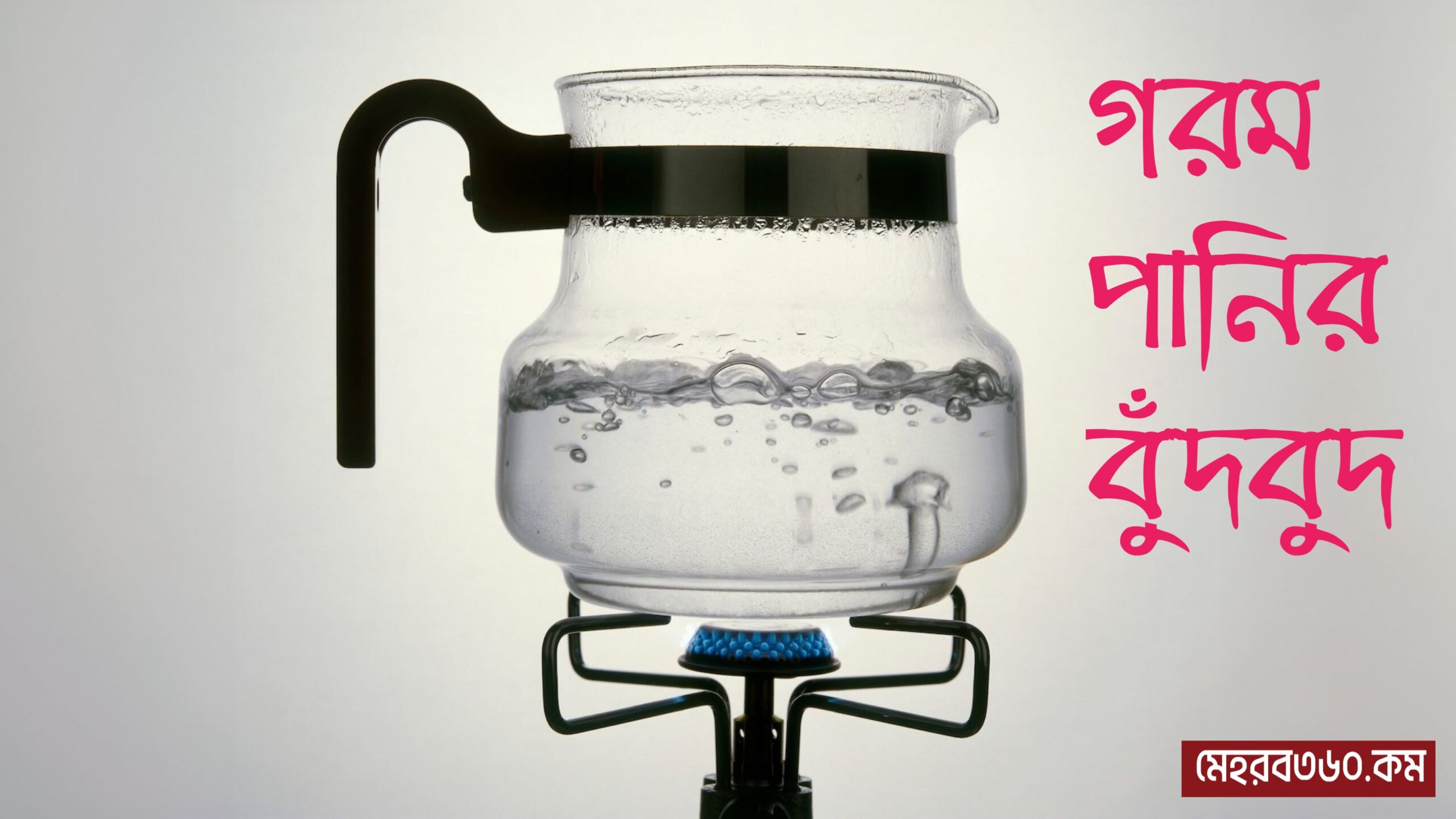
When we heat water on the stove, the heat increases from the bottom, and small bubbles form. As the temperature increases, the bubbles get bigger, and when they finally start boiling, it means that the water has reached 100° Celsius (212° Fahrenheit).
But is that really true? When we boil water in the microwave, we don’t see any bubbles! So why do we see bubbles in boiling water without a microwave?
The science of bubble formation
When water is heated on a hot surface, tiny bubbles on the nano-scale continuously form and collapse. However, for large bubbles to form (which we see), the temperature of the water sometimes has to be higher than the theoretical boiling point (100° Celsius). At temperatures above the boiling point, water molecules prefer to be vaporized rather than liquid. That is, above 100° Celsius, it is more stable to be in the gas (vapor) form. But for boiling to occur, not only vaporization is sufficient, but bubbles must also be formed, and it takes extra energy to form bubbles.
Why does it take extra energy to form bubbles?
A bubble is a distinct boundary between two gas-liquid layers. At this boundary, “surface tension” acts, which compresses the bubble and wants to merge back into the liquid. Therefore, for a bubble to survive, it must contain enough vapor inside it to overcome the surface tension force. Surface tension has a greater effect on small bubbles, while large bubbles are more stable. Therefore, water often boils at a slightly higher temperature than 100° Celsius, which is called superheating.
What makes bubbles easier to form?
Dissolved gases in water, impurities in water, and the surface of the container all facilitate the formation of bubbles. These act as “nucleation points” where bubbles form more easily. This is why the first bubbles appear at the edge of a pot on the stove. Surface tension also causes water bubbles or droplets to be spherical.
Why don’t bubbles appear when water is boiled in a microwave?
The way water is heated in a microwave is different. Microwaves excite water molecules together throughout the entire volume of water, so the water heats up very quickly and evenly. It doesn’t get too hot at the bottom like on a stove. In addition, in a microwave, we usually heat water in a smooth container (such as glass). There are no rough edges, so there is no place for bubbles to start forming. As a result, the water can become superheated to unusually high temperatures, up to about 20° Celsius (36° Fahrenheit) higher! This excess energy is released in an explosive manner when,
the pot is shaken
a spoon is inserted
something is dropped into the water.
Then, huge bubbles can suddenly form and the water can splash out, which is why heating water in a microwave can be dangerous. In addition to water, other liquids can also be superheated. According to Gallo, not only water, but any liquid can be superheated. However, this effect is more dramatic in the case of water because of its high surface tension.