
AI has uncovered new physics within plasma, the fourth state of matter, revealing hidden rules that govern how particles interact in complex systems and challenging long held assumptions. Using a machine learning approach, physicists demonstrated that non reciprocal forces, where one particle influences another differently than it is influenced in return, can be described with remarkable precision, achieving over 99 percent accuracy.
The research, conducted by a collaboration of experimental and theoretical physicists at Emory University and published in PNAS, combined a custom designed neural network with laboratory data from a dusty plasma system, showing that artificial intelligence can move beyond data analysis and prediction to actively discovering new physical laws. According to lead researchers Justin Burton and Ilya Nemenman, the AI model is transparent and interpretable rather than a black box, offering a universal framework that could be applied to other many body systems in physics and biology. Dusty plasma, which consists of ionized gas mixed with charged dust particles, serves as an ideal test environment due to its relative simplicity compared to living systems, yet it still exhibits complex collective behavior.
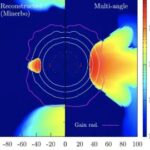
The study revealed that some widely accepted theoretical assumptions are incomplete, including the idea that particle charge scales directly with size and that interaction forces decay independently of particle size. Instead, the AI showed that these relationships are more intricate, depending on factors such as plasma density and temperature. Researchers used advanced tomographic imaging to track particle motion in three dimensions, reconstructing trajectories from laser illuminated snapshots captured by high speed cameras.
The AI model then separated particle motion into components driven by drag, environmental forces, and inter particle interactions, enabling it to capture asymmetrical behaviors similar to two boats affecting each other through waves on a lake. These findings have broad implications, suggesting that the same AI driven approach could be used to study systems ranging from industrial materials like paint and ink to biological processes such as cell movement and cancer metastasis.
Despite the power of AI, the researchers emphasize that human insight remains essential for designing models and interpreting results. The study highlights a growing role for artificial intelligence in scientific discovery, opening pathways to explore complex systems with a level of detail and understanding that was previously out of reach.
Source: sciencedaily.com