

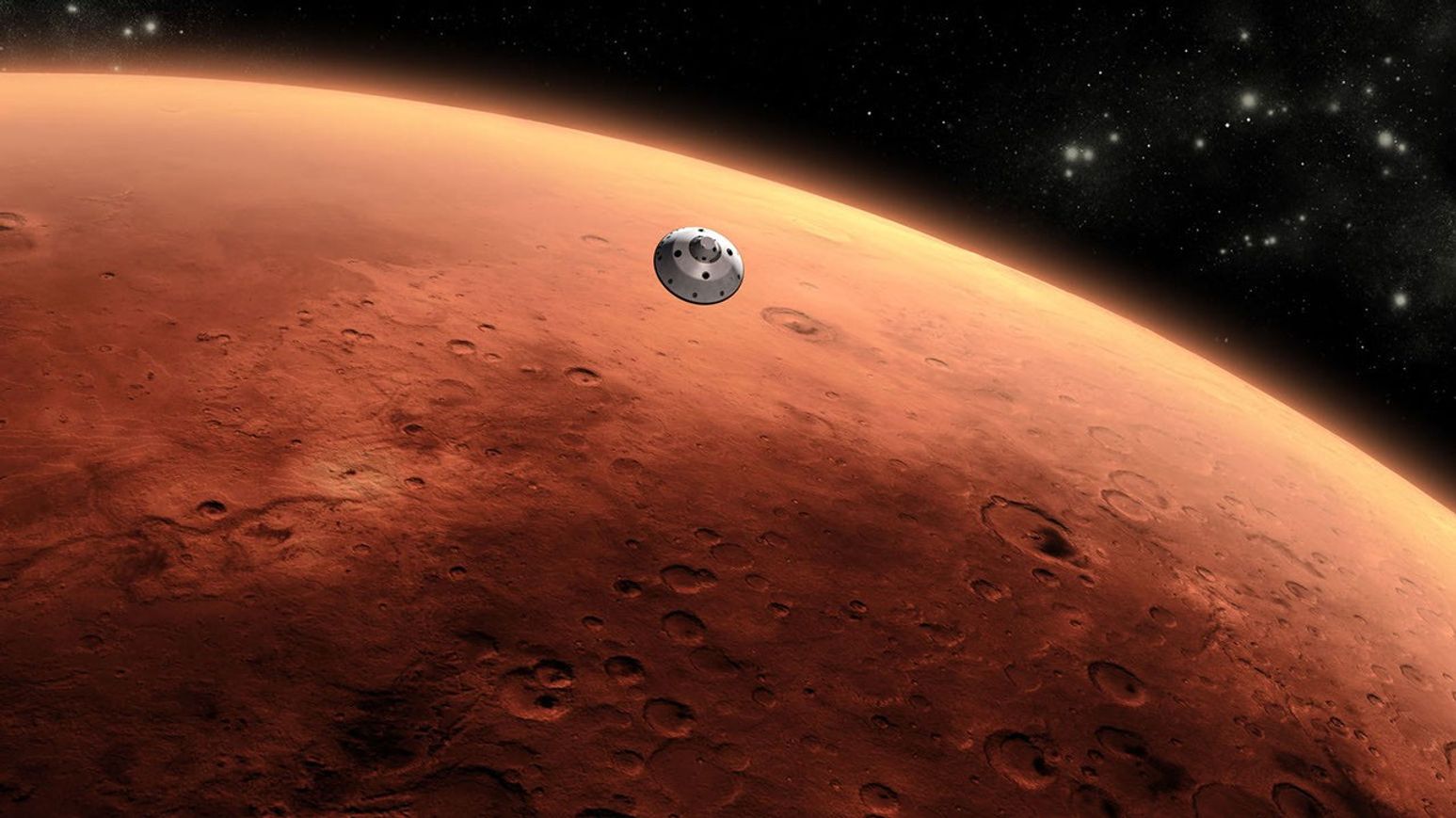
Complex organic molecules have been discovered on the surface of Mars by NASA’s Curiosity rover. Scientists believe these molecules, preserved in 3.7-billion-year-old mudstones, could be strong evidence of ancient life. This finding strengthens long-standing speculation that primitive life may once have existed beneath the dusty surface of Mars.
 |
| NASA Image |
According to NASA, the Curiosity rover is currently exploring the base of Mount Sharp inside the vast Gale Crater. Rock samples collected by drilling in this region revealed medium-sized hydrocarbons such as decane, undecane, and dodecane.
In a research paper published by NASA scientists, these molecules are described as structurally similar to fragments of fatty acids. On Earth, fatty acids are essential building blocks of cells. The preservation of such complex molecular structures in 3.7-billion-year-old Martian mudstones is extremely rare, because cosmic radiation typically destroys organic compounds over time. Researchers used laboratory experiments and computer modeling to study radiation effects on these rocks over nearly 80 million years. Their results suggest that a biological origin for these molecules is a highly plausible explanation.
Since landing on Mars in 2012, the Curiosity rover has continuously uncovered new mysteries. Mount Sharp is made up of layered sediments, resembling a giant layered cake. Each layer represents a different chapter in Mars’ geological history. From ancient lake environments to rocky terrain and modern sulfate-rich layers, the rover is searching for signs that Mars once had conditions suitable for life.
Source: The Times of India