

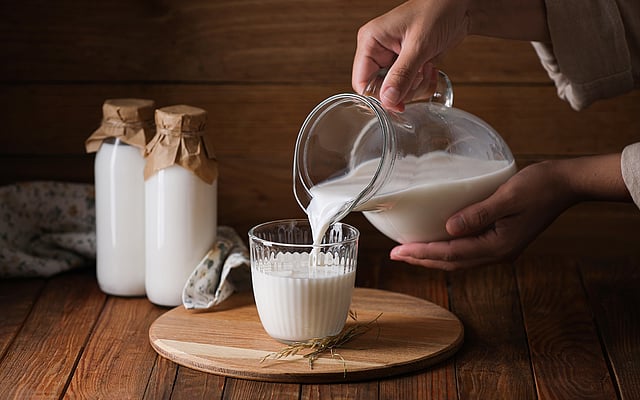
Modern belief says drinking milk strengthens bones, but the science behind it is more nuanced, one cup of pure milk contains around 300 mg of calcium, and since our bones are largely built from calcium, this idea became deeply rooted in everyday health advice and global advertising culture, especially through dairy promotions that encouraged people to drink milk daily for stronger bones, however researchers from institutions like Harvard T.H. Chan School of Public Health, including nutrition expert Walter Willett, explain that this strong “milk equals strong bones” idea was based on relatively short-term studies and was heavily influenced by dairy industry funding, meaning it may not be as absolute as it sounds.
Advertisement
Further research from Stanford University professor Christopher Gardner highlights that more than one third of people in the United States have lactose intolerance, meaning their bodies cannot properly digest cow’s milk, so milk is not a universal requirement for nutrition, calcium itself is essential for bones and teeth, but the exact daily requirement varies across countries, with the United States recommending around 1000 to 1200 mg per day while the United Kingdom suggests about 700 mg, interestingly several studies show that calcium supplements or milk increase bone density by only about 3 percent.
Advertisement
Which is not strongly linked to a major reduction in bone fractures, and a 2020 review even found that countries with lower milk consumption sometimes have lower fracture rates, suggesting that high milk intake is not directly proportional to stronger bones, instead bone health depends more on overall lifestyle factors such as regular exercise, balanced nutrition, and long-term dietary habits, calcium can also be obtained from many alternative sources like tofu, small bony fish, green leafy vegetables, calcium fortified orange juice, almonds, and fortified plant based milk.
Advertisement
Additionally yogurt and cheese are often considered better options for some people because they are easier to digest and can be more effective in reducing fracture risk, especially in older adults, research involving thousands of elderly participants in Australia found that those consuming dairy three times daily had lower risks of falls and fractures, about 33 percent less fracture risk and 11 percent fewer falls, showing that dairy can still be beneficial in certain populations, but it is not the only path to strong bones, ultimately experts suggest that milk can be part of a healthy diet if tolerated, but it is not mandatory, and people who cannot or do not want to drink milk can safely rely on other calcium rich foods while maintaining strong bone health through exercise and balanced nutrition.