
In our society, a doctor performs heart surgery, an engineer builds bridges, and a farmer grows crops. Society runs smoothly because everyone knows their own job. Now imagine asking a cricket player to perform heart surgery. What chaos that would cause!

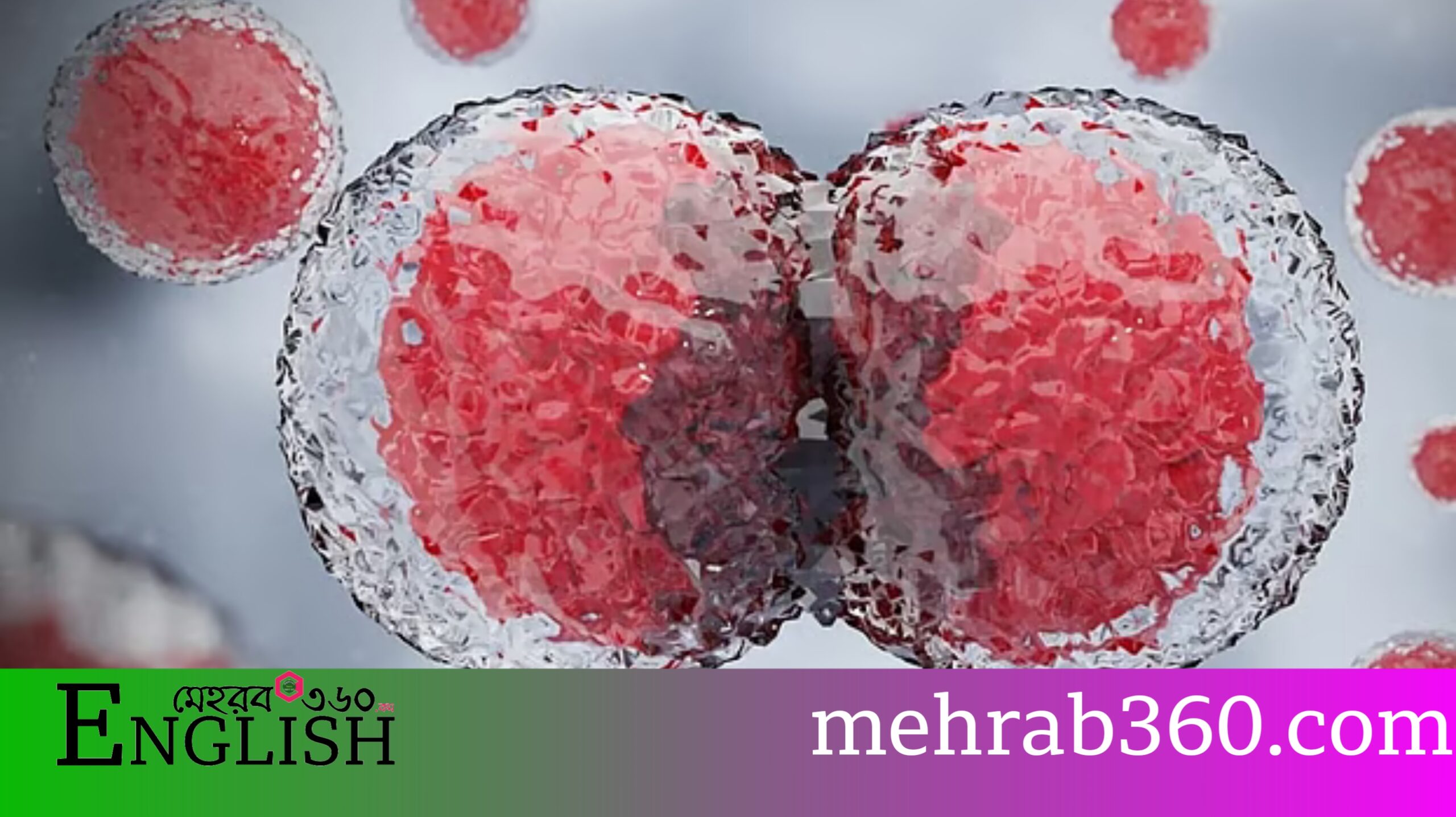
Our body is actually very much like such a vast society or civilization. We all begin life with just a handful of cells. As we grow, those cells keep dividing until they become about thirty trillion cells.
What is truly astonishing is that among these thirty trillion cells, some become neurons or brain cells, some turn into liver cells, and others become bone or skin cells. This naturally raises a question. How does a cell know exactly where it should go and what job it should do? Does it have a map or a GPS? Let us uncover this magical mystery of biology.
At the heart of this mystery are certain special chemical molecules called morphogens. Simply put, morphogens are signals. They create differences in concentration around cells. It works a bit like perfume. If you open a bottle of perfume in one corner of a room, the smell will be strongest near the bottle and weaker farther away. A cell’s DNA is programmed in such a way that it can measure the concentration of morphogens around it.
When a cell detects a very high concentration of a morphogen, it may interpret that as a signal to become a brain cell. When the concentration is low, it may decide to become a bone cell of the leg. This is, of course, an oversimplified example to make the idea easier to understand. In reality, the process is far more complex.
It is worth mentioning that the term “morphogen” was first used in 1952 by the famous mathematician Alan Turing. He was not only a pioneer of artificial intelligence, but also made important contributions to biology. Turing proposed that the spots on a leopard’s skin or the stripes of a zebra are created by chemical reactions involving morphogens. It took nearly sixty years for this theory to be experimentally confirmed.
Returning to our topic, when an embryo grows inside the mother’s womb, one of the very first tasks is to decide which end will become the head and which will become the lower part of the body. This crucial responsibility is carried out by a morphogen called retinoic acid.
Retinoic acid is present in higher concentration at one end of the embryo and lower at the other. Receiving this signal, cells determine their position and activate Hox genes accordingly. These genes give orders to the cells, telling one to form the head and another to form the spine.
Later on, retinoic acid changes its role. After the body is formed, it helps our immune system and plays a role in sperm production. In biology, nothing goes to waste.
Once the body understands where the head and feet are, other morphogens step onto the stage. One of the most famous among them is a protein called Sonic Hedgehog. Yes, you heard that right. It is named after the blue video game character Sonic. This protein plays a central role in forming our central nervous system and our limbs. It even decides which finger will become the thumb and which will be the little finger.
While studying fruit flies, scientists noticed that in the absence of this gene, the flies developed spiky structures on their bodies. They looked somewhat like hedgehogs, which is how the protein got its unusual name. There are also bone morphogenetic proteins, which instruct cells to form bones and cartilage.
The entire process, however, is extremely complex. Cells must constantly measure morphogen concentrations with great precision. A scientist named Arthur Lander suggests that to keep these measurements accurate, cells sometimes destroy morphogens themselves so that fresh signals can be received. It is a bit like double-checking.
Sometimes, though, the system makes mistakes. When that happens, trouble follows. If a cell receives the wrong signal and starts forming the wrong tissue in the wrong place, a teratoma can develop. This is a type of tumor that may contain teeth, hair, or even small pieces of brain tissue. It is like an unskilled worker who builds a wall in the wrong place. The word “teratoma” comes from the Greek word teras, meaning monster.
Our body is truly a vast and complex orchestra. Trillions upon trillions of cells are constantly exchanging chemical signals, communicating with one another, and confirming their positions. It is this perfect coordination that allows us to stay healthy, move our hands and feet, and read these very words.
When you think about how a tiny cell can recognize its address so precisely, it really is astonishing.