

The history of human civilization is essentially the history of energy. From the discovery of fire to the coal-based industrial revolution, modern civilization based on oil and gas, and nuclear fission. Each new energy source has taken our technology, economy, and lifestyle to new heights. But in the 21st century, we face an unprecedented crisis.
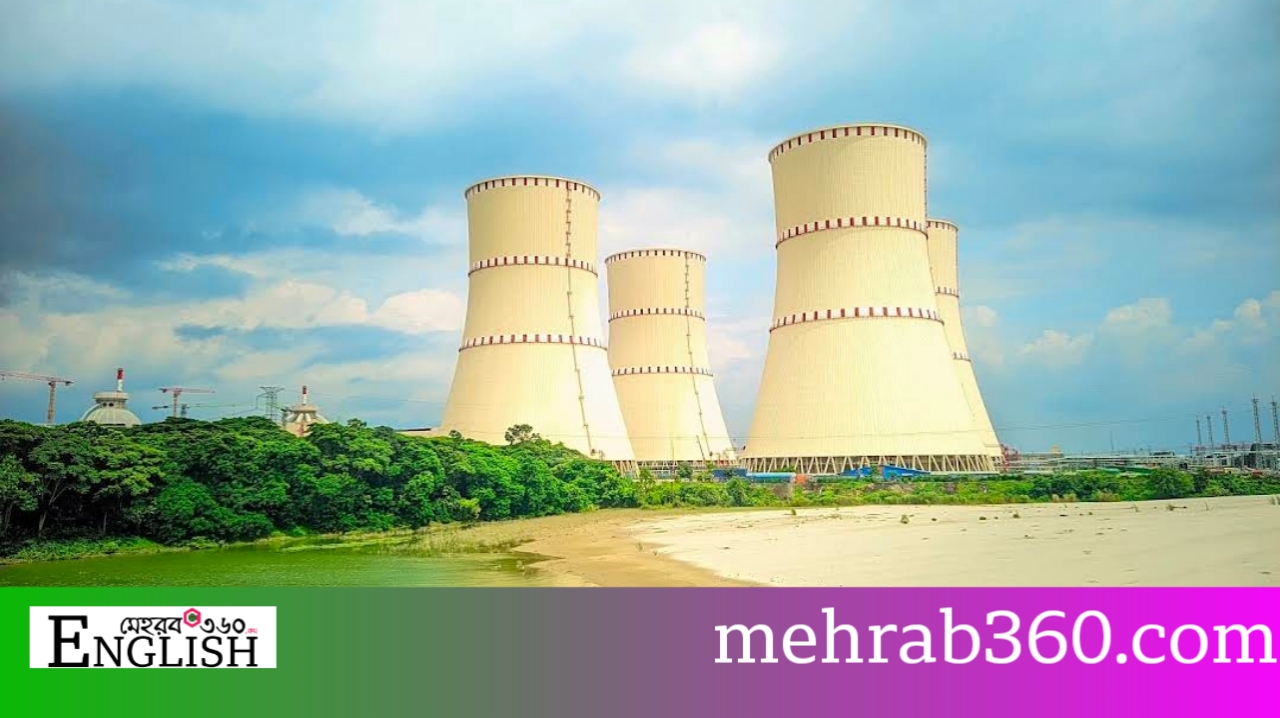 |
| Rooppur Nuclear Power Plant, Pabna. |
Tokamak Technology and the Future of Fusion Energy The history of human civilization is essentially the history of energy. From the discovery of fire to the coal-based industrial revolution, modern civilization based on oil and gas, and nuclear fission, each new energy source has taken our technology, economy, and lifestyle to new heights. But in the 21st century, we face an unprecedented crisis, with fossil fuels rapidly depleting, the devastating effects of climate change (rising sea levels, extreme weather) increasing, and the demand for energy continuously increasing. Now is the time for an energy source that is clean, safe, unlimited, and long-term. In this context, scientists are looking back to the sun. The process by which the sun has been generating immense energy for millions of years. They see nuclear fusion as the ultimate solution for the future. What is fusion and why will it revolutionize? In fusion, two isotopes of hydrogen, deuterium and tritium, fuse at extremely high temperatures to form helium and release a huge amount of energy. This method is used to make hydrogen bombs and various bombs using solar energy. That is, a lot of energy is obtained in this method. Which is much more energy than the energy obtained from uranium from heavy unions produced through nuclear fission.
This process does not emit any carbon, radioactive waste is very low and is a short-lived fuel. Deuterium is almost infinite in the oceans of the world. Incredibly, the energy generated by deuterium from just one liter of ocean water can meet the electricity needs of a person for a lifetime! But the problem is that fusion occurs at the center of the sun at about 15 million degrees Celsius. To make it happen on Earth, it would take even more: about 100 million degrees! At this temperature, matter turns into a fourth state called plasma. There is no metal container that can withstand this heat. Tokamak, a magnetic cage that traps plasma, is the solution to this challenge. The tokamak is a doughnut-shaped chamber in which the plasma is kept floating in space without touching the walls using a strong magnetic field.
The idea for this technology first came to the Soviet Union in the 1950s, and it was perfected through the work of Russian scientists Andrei Sakharov and Igor Tam. The tokamak uses two main magnetic fields, a toroidal and a poloidal, to force the plasma to rotate in a spiral-like path. The plasma is heated by ohmic heating, radio waves and neutral beam injection. 2025-2026: Record years for fusion research Recent years have been extraordinary for fusion. China’s EAST Tokamak maintained a high-temperature plasma for 1,066 seconds (about 18 minutes) in January 2025. France’s WEST Tokamak broke this record in February 2025, lasting 1,337 seconds (over 22 minutes)! The plasma temperature was 50 million degrees Celsius, and the tungsten-based walls were key to this achievement. The Japan-Europe joint project JT-60SA has set a Guinness World Record for the world’s largest tokamak with a plasma volume of 160 cubic meters (in 2025), which is a crucial preparation for ITER. It will begin advanced testing in the second half of 2026. Russia’s T-15MD Tokamak is also making progress, with research underway on high-temperature superconducting magnets and lithium-coated walls. In the private sector, Tokamak Energy (UK) set a new record in 2025 with the ST40 device.
1 mega-ampere plasma current, record triple product and 11.8 Tesla field in HTS magnet. More advanced results are expected in 2026. MEPhI’s MEPhIST: A new gateway to education and remote collaboration Russia’s National Research Nuclear University MEPhI has created the world’s first online controlled educational tokamak MEPhIST (or MEPHIST-0). At the end of 2024, it was connected to Rosatom’s Unified Information Space, opening a Remote Participation Center. As a result, scientists and students from any country in the world will be able to conduct experiments remotely. MEPhI scientist Yuri Mikhailovich Gasparyan said that fusion energy is very important for a densely populated country like Bangladesh.
They are ready for education, research and remote collaboration with Bangladesh. Fusion in the context of Bangladesh: A strategic prospect Bangladesh’s natural gas reserves are rapidly decreasing, putting the import-dependent energy economy at risk. Through the Rooppur Nuclear Power Plant, we are gaining expertise in fission technology. This experience can be a solid foundation for entering fusion research. Gaining expertise in fusion research will create new sectors: plasma physics, advanced materials science, high-performance engineering, neutron technology. This will create technology-based, high-value jobs and strengthen the economy. Conclusion: The dream is now very close to reality. There are still challenges on the path to fusion. Long-lasting stable plasma, tolerance of the reactor walls, extensive development of superconducting magnets. But the records for 2025-2026 make it clear that progress is moving rapidly.
ITER’s first plasma is now expected around 2033-34, and private companies are moving towards commercial fusion in the 2030s. Now is the time for energy-starved countries like Bangladesh to prepare. As the world moves towards building an artificial sun, future generations who are left behind will suffer a huge loss. Let us join this journey for a clean, infinite and prosperous world.
There are still challenges on the path to fusion. Let us join this journey for a clean, infinite and prosperous world.