

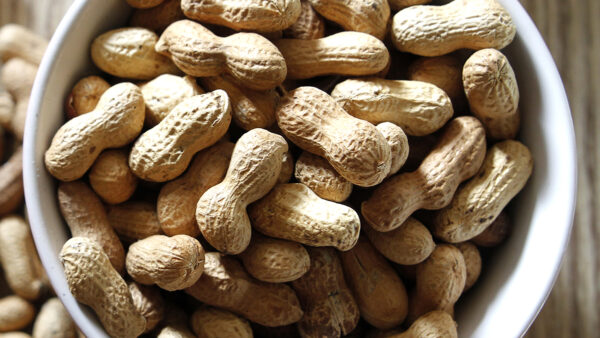
Every year, global peanut production generates more than 10 million tons of waste in the form of discarded shells. What was once considered useless biomass may now hold remarkable value, as scientists have developed a method to convert peanut shells into graphene-like carbon materials.
Graphene, a carbon-based material, is often called a “wonder material” because of its extraordinary properties. It is incredibly strong, extremely lightweight, and an excellent conductor of heat and electricity. Already used in various technologies, graphene has the potential to revolutionize consumer electronics, energy systems, and data storage. However, producing graphene at scale remains expensive and technically challenging, making alternative production methods highly desirable.
A research team from the University of New South Wales (UNSW) has now demonstrated that peanut shells can serve as a low-cost and eco-friendly source for graphene production. Their approach not only reduces production costs but also avoids the use of harmful chemicals. According to mechanical engineer Guan Yeoh, much of the peanut shell waste is either discarded or used in low-value applications. This new method shows that these shells can instead be transformed into high-quality graphene using significantly less energy.
At the core of this process is lignin, a natural polymer rich in carbon and commonly found in plant materials. Peanut shells contain abundant lignin, but the challenge was determining the most effective way to process it. The researchers experimented with several preparation methods before applying a technique called flash Joule heating (FJH). This process delivers a rapid burst of electricity, heating the material to temperatures above 3,000°C in just milliseconds. This extreme heat rearranges carbon atoms into graphitic structures, producing graphene-like materials.
Preparation of the shells proved to be crucial. The most effective method involved a two-step pretreatment: first heating the shells to about 500°C for five minutes, followed by a short high-temperature step. This process removes impurities and converts the shells into char, a carbon-rich material that conducts electricity far better than raw biomass. This step ensures that the resulting graphene has minimal defects and maintains strong conductivity and thermal performance, which are essential for advanced applications.
While previous studies have explored converting peanut shells into graphene, this research highlights how careful control of the preparation process can significantly improve material quality. The resulting product typically consists of a few stacked graphene layers in a turbostratic arrangement. Although promising, the process is not yet ready for large-scale commercial use. Researchers estimate it could take three to four years to fully develop and scale the technology.
Looking ahead, the team plans to test other types of biomass, such as coffee grounds and banana peels, to see if they can also be converted into graphene. Given the abundance of organic waste worldwide, this approach could offer a sustainable and economically viable path to producing one of the most valuable materials of the future.
Source: sciencealert.com. The study has been published in Chemical Engineering Journal Advances.