

The term bristlecone pine encompasses three species of pine trees, family Pinaceae, genus Pinus, subgenus Belfuriana. All three species are long-lived and highly resilient to harsh weather and poor soil. One of the three species, Pinus longaeva, is one of the longest-lived organisms on earth. The oldest of this species is over 4,800 years old.
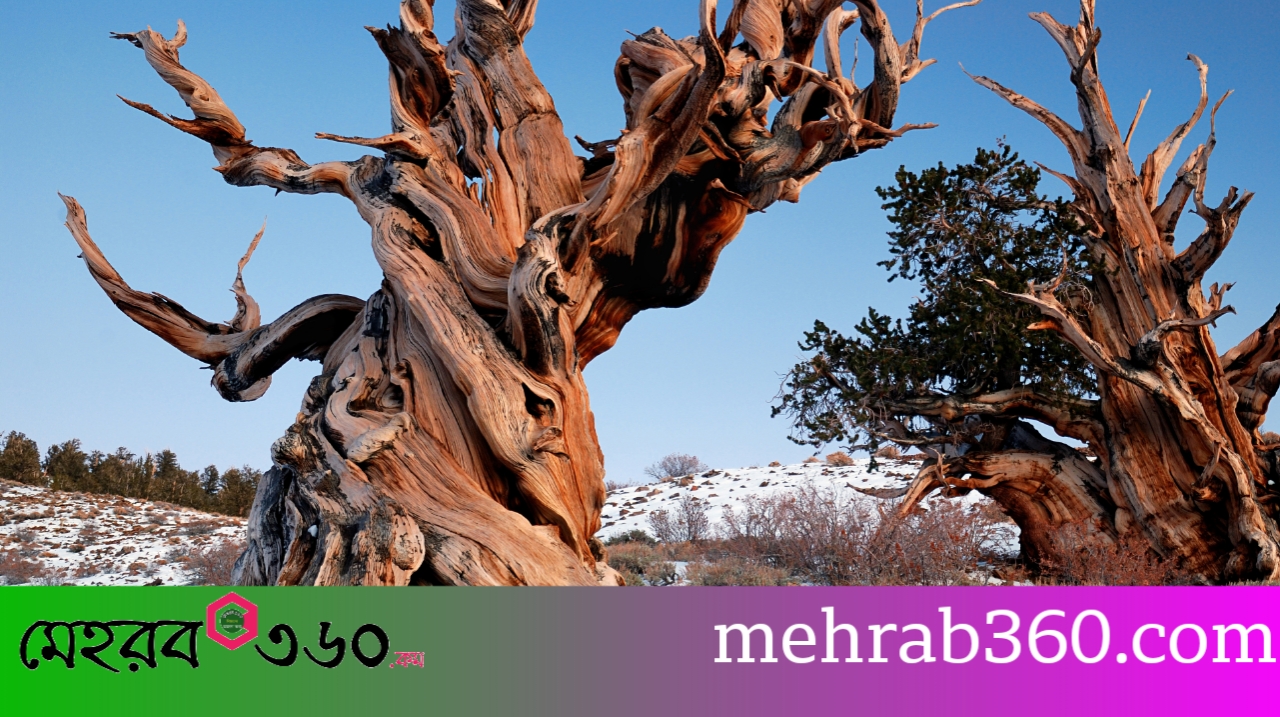 |
| Bristlecone pine |
Bristlecone Pine
Which makes it the oldest living organism of any species. Many scientists are interested in knowing why this tree can live so long. In one study, they discovered that Pinus longaeva has high levels of telomerase activity, which slows or prevents the rate of telomerase decay.
The bristlecone pine is a gymnosperm, a plant in the pine family. It does not flower or bear fruit, and the seeds are exposed in the cone, not covered by a fruit cover.
Scientific classification
Kingdom: Plantae
Clade: Tracheophytes
Clade: Gymnospermae
Division: Pinophyta
Class: Pinopsida
Tribe: Pinales
Family: Pinaceae
Genus: Pinus
Subspecies: P. subg. Strobus
Region: P. sect. Parrya
Suborder: P. subsect. Balfourianae
It is native to western North America, particularly the mountainous regions of California, Nevada, and Utah. It grows in dry, cold, and rocky environments where other trees cannot survive. It grows very slowly, resulting in very dense and hard wood, which protects it from disease, insects, and decay. Bristlecone pines can live for thousands of years; some trees have been scientifically determined to be over 4,800 years old. The leaves of the tree are needle-like and do not shed for a long time, with a single needle often remaining on the tree for 30–40 years. Its cone-shaped fruit, or cone, contains seeds that are naked, making it a gymnosperm. The tree is considered of great importance in natural history, climate research, and arboreal chronology because of its harsh climate, slow growth, and unique structural features.
The bristlecone pine’s root system is mostly composed of highly branched, shallow roots, with a few large, branched taproots providing structural support. The bristlecone pine is highly drought-tolerant because of its branched, shallow root system, its waxy needles, and its thick needle cuticle that helps retain water.